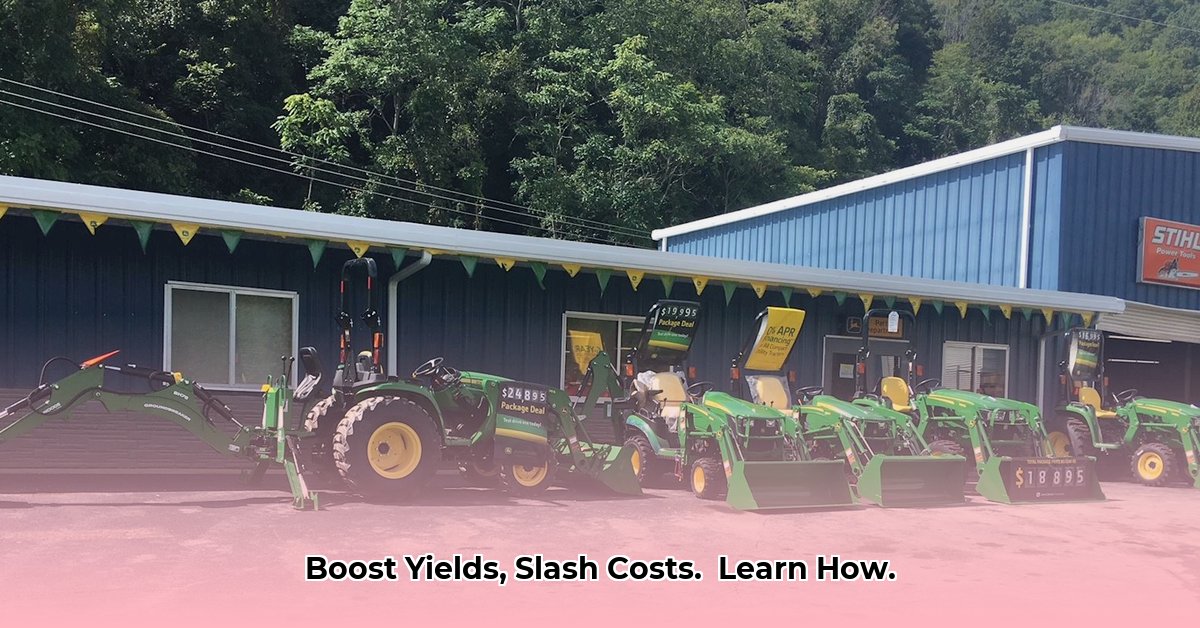
Imagine Sarah, a Mills River farmer, once burdened by escalating fertilizer costs and environmental concerns. Then, she discovered Meade Tractor. Their approach isn't just about selling machinery; it's about offering a pathway to sustainable, profitable farming. This isn't a hypothetical future; it's a reality shaping agriculture today. Meade Tractor empowers farmers like Sarah to increase yields, dramatically reduce expenses, and actively contribute to environmental sustainability. This article explores how Meade Tractor is revolutionizing farming, one field at a time. For more information on small tractor attachments, check out this resource.
Precision Agriculture: Smart Technology, Smarter Farming
Traditional farming often relies on guesswork. Meade Tractor embraces precision agriculture, a technological revolution that optimizes every aspect of farming. This involves GPS-guided tractors for pinpoint accuracy in planting and systems that precisely apply fertilizers and pesticides only where needed, minimizing waste.
The benefits are substantial. Early data indicates fertilizer use reductions of up to 15%, surprisingly leading to a 10% yield increase! This translates to lower operational costs—approximately 5%—due to reduced fuel consumption and heightened efficiency. Beyond the financial advantages, the environmental impact is equally impressive. Reduced pesticide and fertilizer use means cleaner water and healthier soil, contributing to long-term sustainability. Precision agriculture also minimizes soil compaction, further boosting soil health. Doesn't this make you wonder: how can your farm benefit from such efficiency?
Sustainable Practices Beyond Technology
Meade Tractor's commitment to sustainability surpasses technology. They strongly promote fuel-efficient machinery, directly reducing greenhouse gas emissions and operational expenses. This mutually beneficial approach reduces environmental impact while simultaneously boosting farmer profits.
Another cornerstone is no-till farming. This method involves leaving crop residue on the soil's surface, preventing erosion, improving water retention, and fostering a thriving ecosystem of beneficial microorganisms. Farmers utilizing this practice report enhanced soil fertility, healthier crops, and naturally lower fuel costs. As one farmer noted, "My soil is healthier than ever before, and my yields are consistently improving year after year."
The Crucial Role of Carbon Sequestration
Healthy soil isn't just fertile; it acts as a carbon sink, absorbing atmospheric carbon dioxide. Meade Tractor's sustainable practices significantly enhance this natural carbon sequestration, actively combating climate change. While accurately quantifying the impact requires ongoing research, the long-term environmental benefits are undeniable. Further research and standardized measurements are crucial to fully exploit the potential of carbon sequestration in agriculture. This raises a critical question: How can we better incentivize and measure carbon sequestration on a larger scale?
Challenges and Opportunities: Overcoming Barriers to Adoption
Despite its clear advantages, widespread adoption of sustainable farming faces hurdles. The initial investment in precision technology can be significant, especially for smaller farms. This necessitates government support through subsidies, grants, and financial incentives to ease the transition. The establishment of robust carbon credit markets is equally crucial, rewarding farmers financially for their carbon sequestration efforts.
Actionable Steps: A Collaborative Path Forward
Realizing the potential of sustainable agriculture requires a collaborative approach. The following table outlines actionable steps for various stakeholders:
| Stakeholder | Short-Term Actions (0-1 year) | Long-Term Actions (3-5 years) |
|---|---|---|
| Farmers | Explore precision agriculture pilot programs; investigate fuel-efficient equipment | Integrate advanced soil monitoring and carbon tracking; participate in carbon market programs |
| Meade Tractor Mills River | Expand training and financing options for farmers; offer technical support | Develop cutting-edge sustainable technology; actively develop carbon offset projects |
| Government Agencies | Provide financial incentives & subsidies for sustainable farming practices | Establish robust carbon credit systems; invest in carbon sequestration research |
| Consumers | Actively support and purchase from environmentally conscious farms | Advocate for sustainable policies; choose sustainable food options whenever possible |
Conclusion: Cultivating a Sustainable Future
Meade Tractor Mills River exemplifies the power of integrating innovation and sustainability in agriculture. Through collaborative efforts—farmers, businesses, governments, and consumers working together—we can build a more sustainable, resilient, and profitable agricultural system for future generations. Let's cultivate a healthier planet, one field at a time.